Sign in to your account Sign up
Change language
Expertise and innovation for fences since 1973

The first-class ecommerce for fences, posts and gates
Buy online with just a few clicks and receive the order where you want

In our online store you'll find everything you need for fencing and the garden: chainwire fencing, wire mesh, posts and stays, gates, shading net, plastic meshes, accessories, synthetic lawns, sports equipment.

We Answer Your Questions About Fences – Episode 2

At Fenceshop, we've decided to dedicate a series of videos and in-depth articles to the most frequently asked questions we receive from our users on YouTube and through our ecommerce site. In this second episode, we address six practical and technical questions about the installation and maintenance of fences, providing detailed answers and useful tips for anyone looking to build a fence effectively and durably.

1. Cementing end and corner posts: why is it essential?

One of the most common questions we receive concerns the need to cement end and corner posts in fences. Even if the posts are buried to a depth of 70-80 cm, we always recommend cementing at least the end and corner ones. These posts are subject to greater stress because the tension wires and the mesh itself are attached to them. Without cement, even the best-driven post will tend to come loose or shift over time. Cement guarantees greater stability and longevity for your fence, reducing the risk of sinking or collapse.

2. Posts with base plates on sloped walls: how to keep them perfectly level?

Another fundamental aspect is the installation of posts with base plates on walls that are not perfectly horizontal. If the slope is slight (up to 4°), you can correct the position by using iron washers or shims to fill the gaps and securely fasten the base plate. Alternatively, you can use a chemical anchor which, once hardened, provides a solid fix and a clean look, similar to a silicone finish. For steeper slopes, on our website you can find adjustable tilt base plates for T-posts (available in 30x30 and 35x35 mm), which allow you to perfectly adapt the inclination of the post to the wall, always ensuring a precise and secure installation.

3. Welded mesh or chain link mesh: which one to choose for dogs?

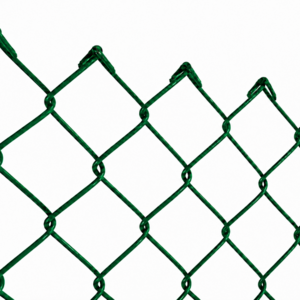
The safety of pets is one of the most frequent concerns. Some users believe that welded mesh is weaker compared to chain link mesh, especially with very strong or determined dogs. Our experience leads us to recommend welded mesh with a 50x25 mm grid, which is particularly sturdy with tight mesh, ideal for most dogs. However, if the animal is especially energetic, even this mesh can be damaged. Chain link mesh has the advantage of not coming apart at the welds, but if it isn’t thick enough (at least 4 mm), it can still be bent or damaged. For extreme situations, we suggest considering galvanized grating panels, which offer greater resistance but require a larger investment and a more demanding installation.

4. Should the mesh touch the ground or the wall?

When installing mesh, it's important to evaluate whether to have it resting directly on the ground or on the low wall. If there are no particular needs for animal containment or intrusion protection, we recommend keeping the mesh raised by 2-3 cm from the wall or the ground. This precaution prevents the accumulation of dirt and moisture between the mesh and the support, thus preserving the material quality for longer and preventing rust or damage from humidity. Burying the mesh is only recommended in specific cases, such as when it’s necessary to prevent animals from passing under the fence.

5. Wire through the holes in the posts: what’s the right method?

Another question concerns the correct way to position the wires in the posts. The top wire, which supports the weight of the mesh, should always pass inside the hole of the post to ensure stability and security. The middle and bottom wires, however, can be run externally to the post during installation: this allows you to better adjust their position during tensioning and to fasten them more easily, adapting them to the mesh grid. This system avoids awkward constraints and enables a neater, more precise tying.

6. Budget mesh and shrinkage during installation

When using budget meshes with thin wires (for example, 2 mm or less), keep in mind that these tend to shrink if pulled too tight during installation. Meshes with thick wire (4 mm) are much more resistant and retain their original length better, even under tension.

7. Bonus: tutorial on tension wires

Lastly, we’re responding to a comment on one of our video tutorials dedicated to the installation of tension wires and wire tensioners. Although some may find these steps obvious, we believe it's essential to practically -- not just theoretically -- show how these operations are done, since it’s often the details that make the difference in the durability and effectiveness of a fence.

Conclusions

At Fenceshop, we’re always available to answer your questions and provide support in selecting and installing your fences. On our website you’ll find guides, tutorials, and all the products mentioned, from adjustable plates to mesh specific for animals, down to the must-have accessories for a truly professional installation. Keep following us and continue to send us your questions: your feedback helps us improve and provide more useful and up-to-date information.

To continue browsing, rotate to landscape your device.
To continue browsing, rotate to portrait your device.
Thanks!
Watch out!

It looks like you are using Internet Explorer, a browser that is no longer supported, as well as unsafe!
We recommend that you continue browsing after downloading the latest version of Chrome or Firefox.