Sign in to your account Sign up
Change language
Expertise and innovation for fences since 1973

The first-class ecommerce for fences, posts and gates
Buy online with just a few clicks and receive the order where you want

In our online store you'll find everything you need for fencing and the garden: chainwire fencing, wire mesh, posts and stays, gates, shading net, plastic meshes, accessories, synthetic lawns, sports equipment.

How to Repair a Torn Chain Link Mesh: Step-by-Step Guide

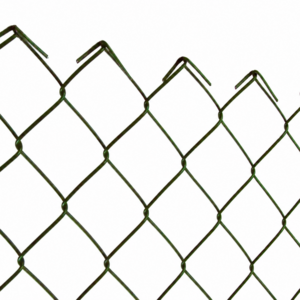
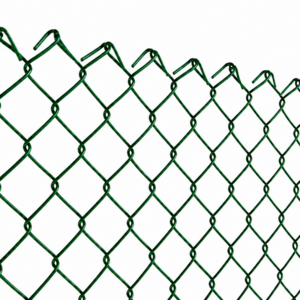
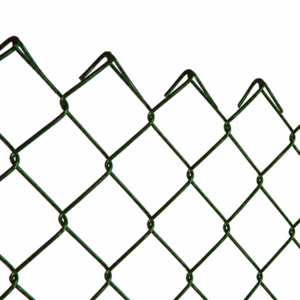
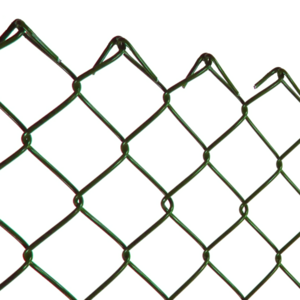
Here at Fenceshop, we know how frustrating it can be to have a damaged chain link mesh. This type of damage can happen to anyone—whether it’s a fence for the garden, the vegetable patch, or an industrial area. Causes may vary: a large dog climbing the mesh, a farm vehicle accidentally bumping into it, or even a flaw in the roll or an installation mistake. Chain link mesh, by its very nature, is more prone to unraveling compared to other types of fence, but with the right approach, you can repair it without having to replace the entire panel.

Technical Features of Chain Link Mesh

First of all, remember that chain link meshes are usually supplied in rolls and are attached to posts spaced apart (approximately every 2 meters), kept taut by specific wires. During installation, the mesh is put under tension, so a constant force is exerted along its entire length. This is a crucial detail to bear in mind before attempting a repair, because once the damaged mesh is cut, the tension could cause the mesh to “open up,” pulling the edges apart and possibly bending the posts outward.

Preparing the Work Area
  • Secure the posts: Before cutting the damaged portion of the mesh, it’s necessary to stabilize the posts between which the mesh is stretched. This can be done in two ways:
    • Applying brace arms (angled structures such as iron strips, tubes, or L-profiles) to the outside of the posts to prevent movement.
    • Alternatively, securing a recovery wire between the affected posts to maintain tension and prevent shifting when the mesh is cut.
  • Make the mesh “loose” in the repair area: It’s crucial that the mesh in the repair zone is as soft as possible; therefore, the two edges of the torn mesh should be brought closer together. This can be done by:
    • Using a cable winch (Tirvit) to draw the edges together and keep them in place.
    • Or, if specific tools aren’t available, creating temporary manual ties, as if stitching skin, to pull the edges as close as possible.
  • Remove existing fix-ties: All fix-ties that secure the mesh to the tension wires in the working area must be removed to allow free access to the mesh that needs replacing.
How to Replace the Damaged Mesh
  • Cutting out the damaged chain link mesh: Only after having stabilized the area and loosened the mesh should you proceed to cut the affected portion.
  • Selecting the replacement mesh: It’s important to use a piece with the same type, height, and wire gauge as the original mesh. Make sure you choose mesh with the correct twist direction (right or left), so it integrates perfectly with the rest of the mesh.
  • Inserting the new mesh: Insert the new piece between the edges and “twist” it into place, as is normally done when joining chain link mesh. In this stage, having soft, flexible edges is essential to work comfortably and to avoid further damaging the fence.
  • Temporary attachment to the posts: Once the new mesh is in place, temporarily tie the mesh to the posts to prevent it from moving during the final phase.
Removing Temporary Supports and Settling the Mesh

Once the job is done, remove all temporary ties, brace arms, or recovery wires used to secure the posts. At this point, the mesh will regain tension and settle into its correct position. One last helpful tip: gently “tap” the mesh with your hands to ensure even force distribution and help the newly inserted mesh integrate perfectly with the rest of the fence.

Final Tips & Useful Resources
  • Be mindful of the forces at play: Throughout all steps of the repair, remember that the mesh is always under tension. Working without securing the posts or loosening the repair area could compromise the stability of the entire fence.
  • Choose the right material: Using a replacement mesh identical to the original is crucial for a durable and safe outcome.
  • Further resources: On our channel and in related resources, you’ll find specific video tutorials on how to join chain link mesh and how to use tools such as the Tirvit to make these operations easier.
Where to Find Repair Materials

All the necessary materials for repairing chain link mesh—from fix-ties and tension wires to replacement mesh—are available on our website www.fenceshop.eu. We also encourage you to visit the official site www.reteplastic.it for all the latest news and products for your fences.

Conclusion

Repairing a torn chain link mesh isn’t difficult if you follow the right steps and pay attention to the technical characteristics of your fence. We at Fenceshop are always available for advice and support—keep following us for more tutorials and practical guides about fences and DIY.

To continue browsing, rotate to landscape your device.
To continue browsing, rotate to portrait your device.
Thanks!
Watch out!

It looks like you are using Internet Explorer, a browser that is no longer supported, as well as unsafe!
We recommend that you continue browsing after downloading the latest version of Chrome or Firefox.